


G S-T: That looks to be a fruitful approach. It will be interesting to see where it leads and what eventuates, especially after working on the Sampson Flat project. Robert Adams and Fay Goodwin are interesting photographic reference points. I’ll pick up on Fay Godwin, as she photographed British rural landscapes with particular reference to their traces of history, the way that human beings had intervened and acted the land, and she had a sense of the emerging ecological crisis in 1980s England. There is some background on Godwin’s landscape photography here.
I pick up on your reference Godwin because most photographers of the land in Australia ignore rural landscapes—eg., the colonial photographers such as Samuel Sweet in South Australia (he thought them boring); or the contemporary large format wildness photographers who concentrate on the beauty of an “untouched” nature in national and state parks. Off the top of my head I don’t know any photographer in Australia photographing rural landscapes as a project, as distinct from photographing old or ruined rural architecture, such as Andrew Chapman. Do you?
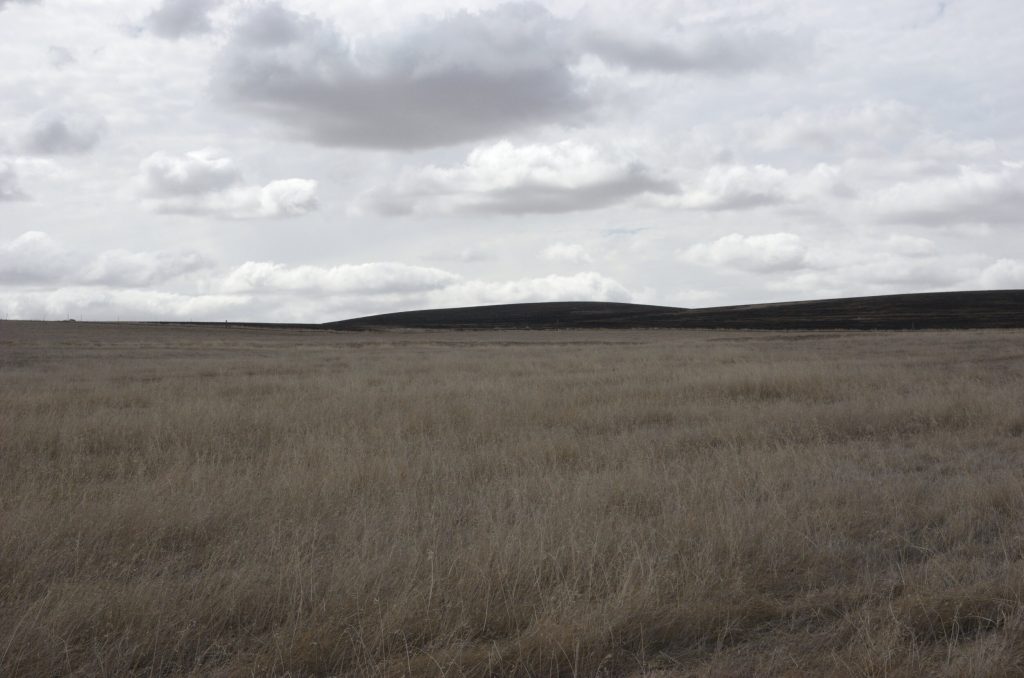
I can see three differences between Godwin’s approach to photography and yours. Firstly, Godwin mostly photographed in black and white film whereas you are working with colour film. Secondly, Godwin’s landscapes emerged out of her love of walking the British countryside whereas your approach to the Tablelands between the Eastern Mt Lofty’s and the Murray Plains appears to be based on driving a car along a gravel road on a whim. Thirdly, Godwin was strongly connected to the British literary tradition in London, whereas you, as an ecologist, come out of a scientific tradition in Australia.
So what books of Godwin’s photography do you have in your library? What part of Goodwin’s approach to photographing the land do you connect with? How has this influence shaped the way that you approach photographing the Tableland region? Given these differences how do you see your approach to photographing the land as being different to that of Godwin’s. Or is your approach more a response to the nature of the land in this part of South Australia, which is quite different to that of England or Scotland?
GH: I hadn’t thought about precedents in Australian photography. I suppose rural landscapes have largely been the province of genre photography: postcards, calenders, camera clubs. Mind you, some of the early postcard photographers were pretty good. And the Australian Pictorialists , such as Cazneaux, Kauffmann, others – took to agrarian subjects. No doubt there’s some thoughtful people out there working with rural landscapes now; some of Paul Krieg’s earlier work comes to mind, and it seems that John Austin intends to with respect to the Western Australian wheatbelt.
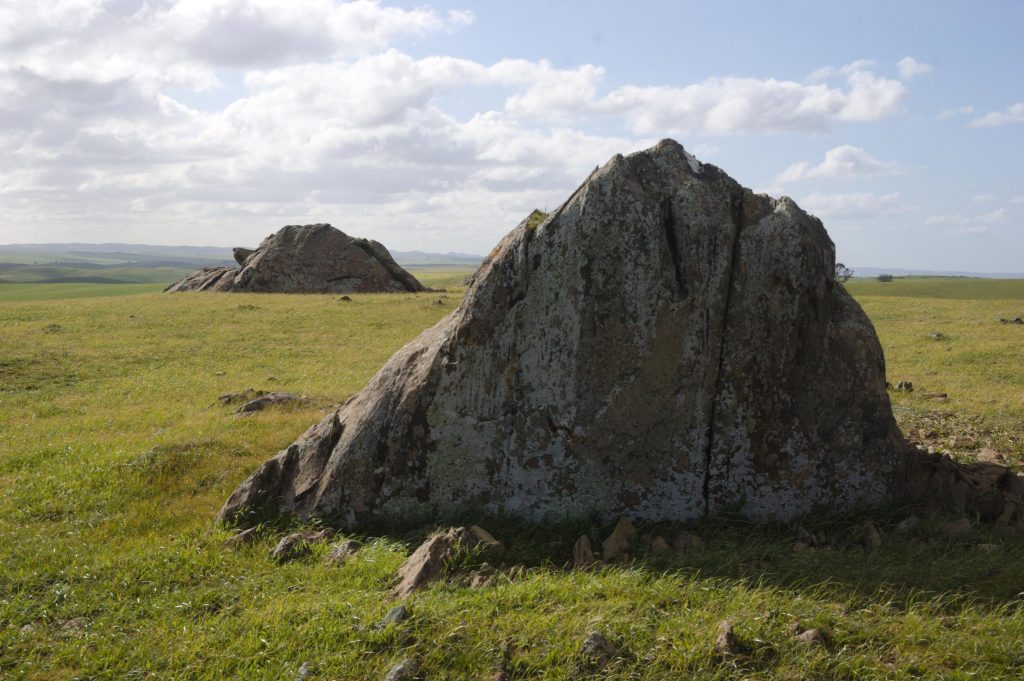
A few words on my working method: ‘driving a car along a gravel road on a whim’ is my preventative against staleness. It gives serendipity an opportunity to go to work: it’s a form of research; scouting new locations, a means of finding out about things and locales of which I had no idea. Sometimes whim gives me a new perspective on subjects, which helps me stay receptive. It’s akin to browsing in a library: you head for the subject shelf you are interested in, then pick the unfamiliar volumes to discover what you don’t already know about, but which could be enlightening.
Walking remains an important part of the way I photograph, though I doubt I was ever the walker Godwin was. For years I lugged a Technika and tripod up and down Hills fire tracks and walking trails. In recent years I’ve had some injuries and setbacks, so now I use my car to move between prospective locations. But I still explore locations more closely on foot, albeit over shorter distances, sans tripod, and with a lighter camera. Nearly all my ideas come to me after I’ve wandered for a while.
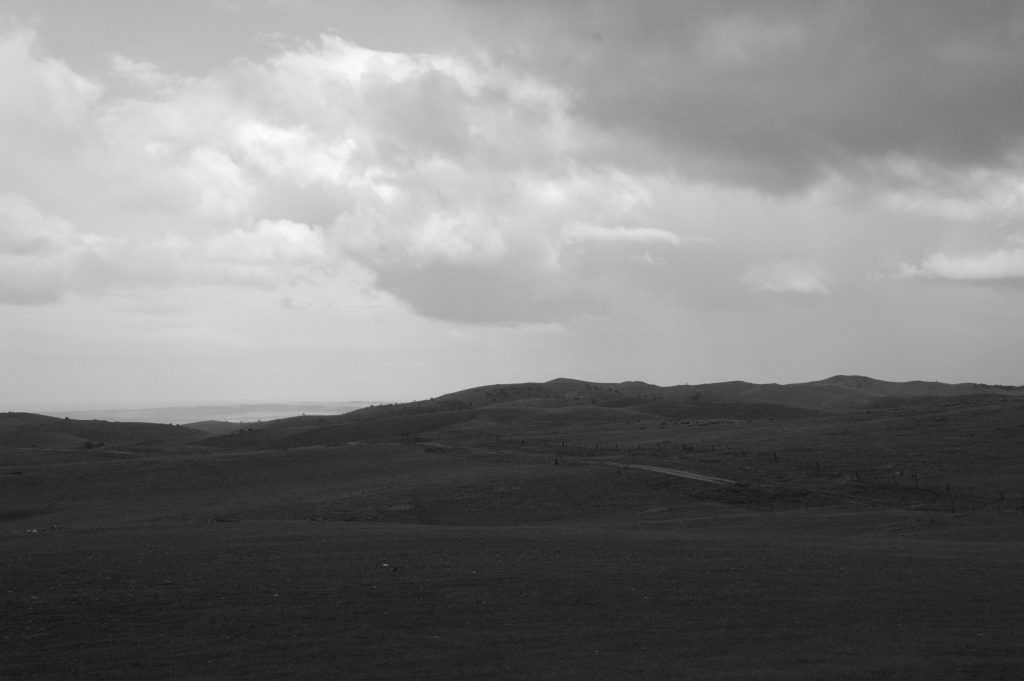
I don’t know that the Mid-North is hugely different from the English and Scottish landscapes Godwin photographed, at least not from a geomorphological perspective. They’re all mature landscapes with rounded shapes and moderate slopes, where the few trees and shrubs do little to obscure the underlying landforms. And they’ve all been subjected to similar agricultural practises for generations. Tableland was among the first areas in South Australia settled by Europeans: perhaps those early Anglos and Scots felt more at home in this landscape than elsewhere in the state.
Talking about influences seems more difficult the older I get. With time and practise other people’s ideas become more deeply entwined in my own thinking, so it’s harder to identify where each strand of my imagemaking originates. Fay Godwin’s style was distinctive (though partly traceable to Brandt’s landscapes). My own particular set of visual tics is rather different: what I take from Godwin is an appreciation of her sensibility, and an awareness of the possibilities that – as evidenced in her example – these landscapes can offer.
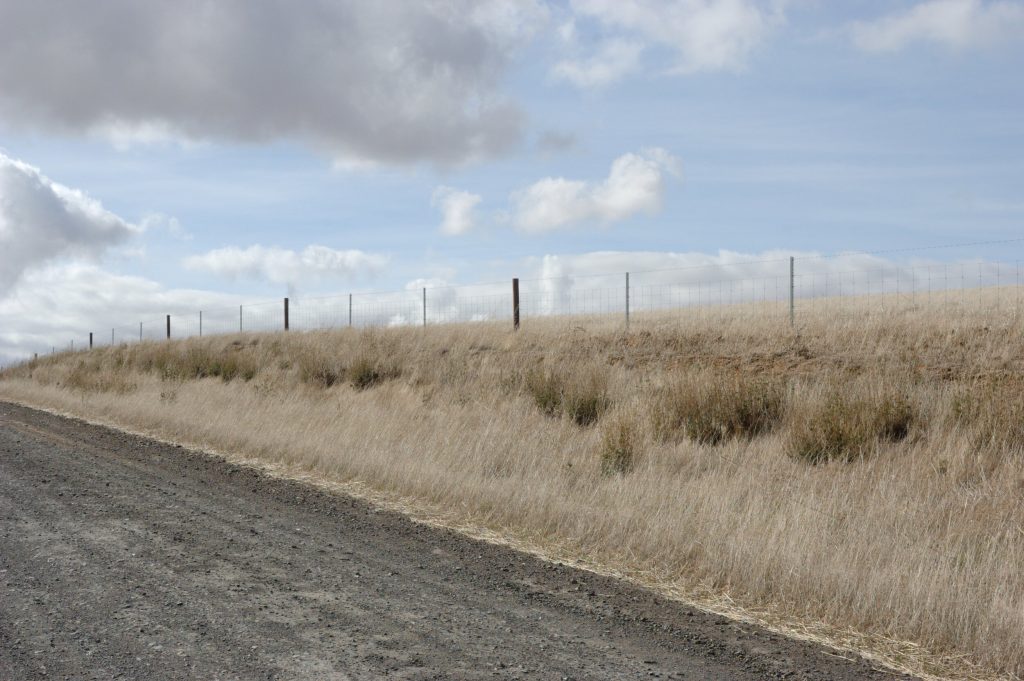
That awareness can mean I’ll pursue an idea that I might not otherwise have done, or I might frame a photo a bit differently, but I won’t be trying to emulate her. My response to what I see in front of my camera predominates, but my response is tempered by what I’ve seen in Godwin’s work. And on gloomy winter days when the weather is wild and the clouds are closing in fast, certain of Godwin’s photos spring readily to mind.
Of Godwin’s books, I have ‘The Land’, ‘This Scepter’d Isle’, and ‘Our Forbidden Land’. Strand and Newhall’s ‘Time in New England’, with its linking of landscape with history and ethos, has occupied my thoughts too.
(to be continued as there will be a part 2 of the interview)