


My memory of the landscape around Tableland Rd from the 1990s was that it was anything but picturesque —it was bleak and barren. Graeme’s Tableland photos persuaded me to return to, and explore, this section of the Mt Lofty Ranges. My previous road trips in this part of South Australia for the Mallee Routes project, including the most recent one, were attempts to describe the historical present through an exploration of the Mallee country and the Murray plains to the Murray River. History, I realized, was a way of seeing the world.
On my last phototrip to the Murray Mallee I looked for Tableland Rd whilst going to Eudunda from Dutton. I was looking for a road connecting the Truro -Eudunda Rd and the Tableland Rd, but I couldn’t find one. I ended up driving on Gap Rd as it wound its way up into the Mt Lofty Ranges. I was lost, but the photographic possibilities looked promising and I reckoned that I could re-connect to the large format photography from the 1990s. I quickly scoped a possible image before returning to the familiar territory of the Truro -Eudunda Rd.
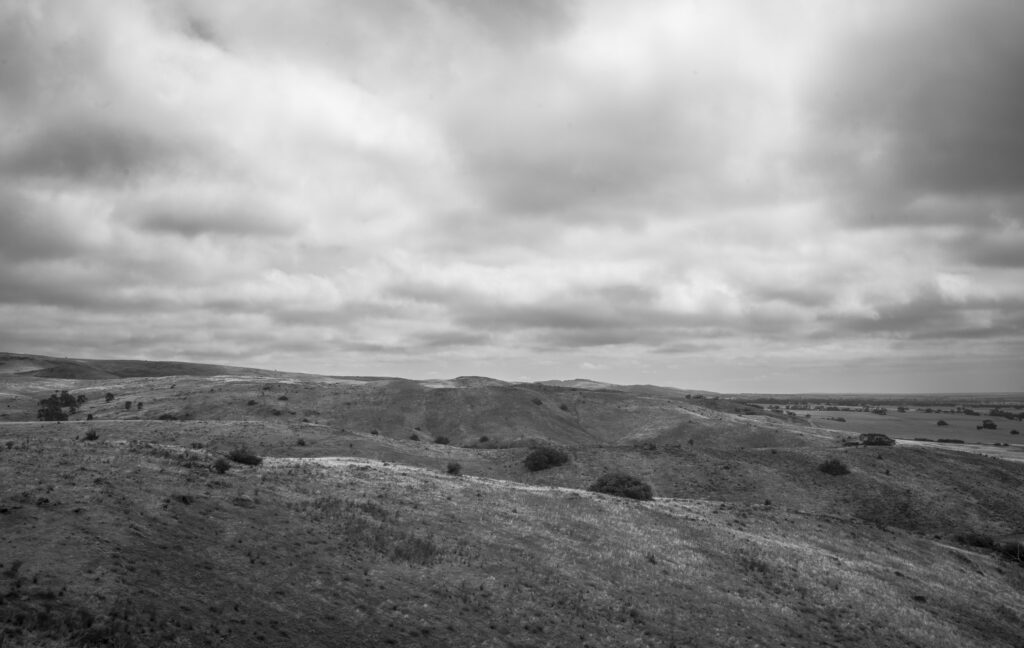
I meet a local who told me the landscape looked better when it was green. He informed me that it was easier to access Tableland Rd from Eudunda, so I decided to drive back that way on my return to Dutton and Truro. My plan was to make some some large format (8×10) black and white photos, but the gale force south-easterly wind blowing that morning put a full stop to that possibility.
In these conditions I could only scope some images with a digital camera with the car acting as a windbreak:
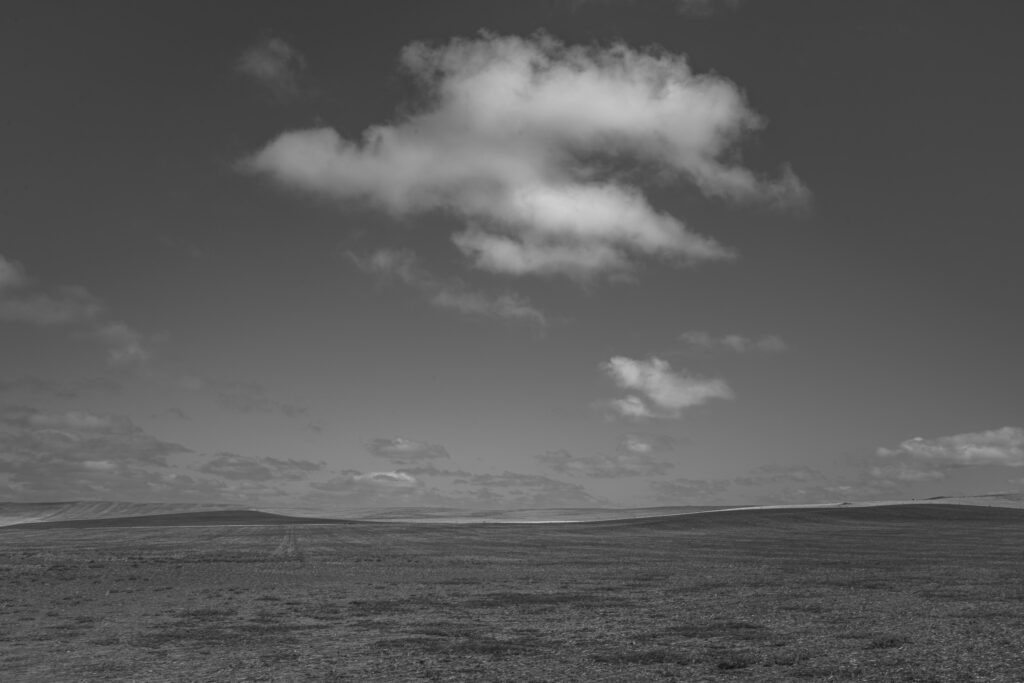
Though Tableland Rd is accessible — as it is possible to free camp at Eudunda — my experience that morning indicated that this part of the Mt Lofty Ranges is very windswept, and that this would make large format (5×7 or 8×10) photography with its long exposures difficult, if not almost impossible. The calm days with a gentle breeze would be few and far between.
Graeme is right to make this regional landscape a photographic project. It is a fascinating landscape with atmosphere and form which tests one’s photographic skills to work with a naturalistic pictorial space in order to move beyond both the pastoral and modernist (expressionist and surrealist) landscape traditions through a re-engagement with aspects of naturalism. This opens up possibilities to explore both how this regional landscape is different and our relationship to the landscape, whilst foregoing any gesture that this is an authentic contemporary vision of the idea of Australia. Photography becomes a form of historical thinking.
Possibilities to link to the tradition of ‘writing the landscape’ as in Eric Rolls‘ A Million Wild Acres: a regional history of the forest in northern NSW, (known as the Pilliga Scrub) that challenged European assumptions about nature. The argument was that some of our dense forests are the result of white settlement rather than being primeval. But this ‘writing the landscape’ was also based on an attachment to real places that are often ignored, forgotten or over looked because it is seen as insignificant.
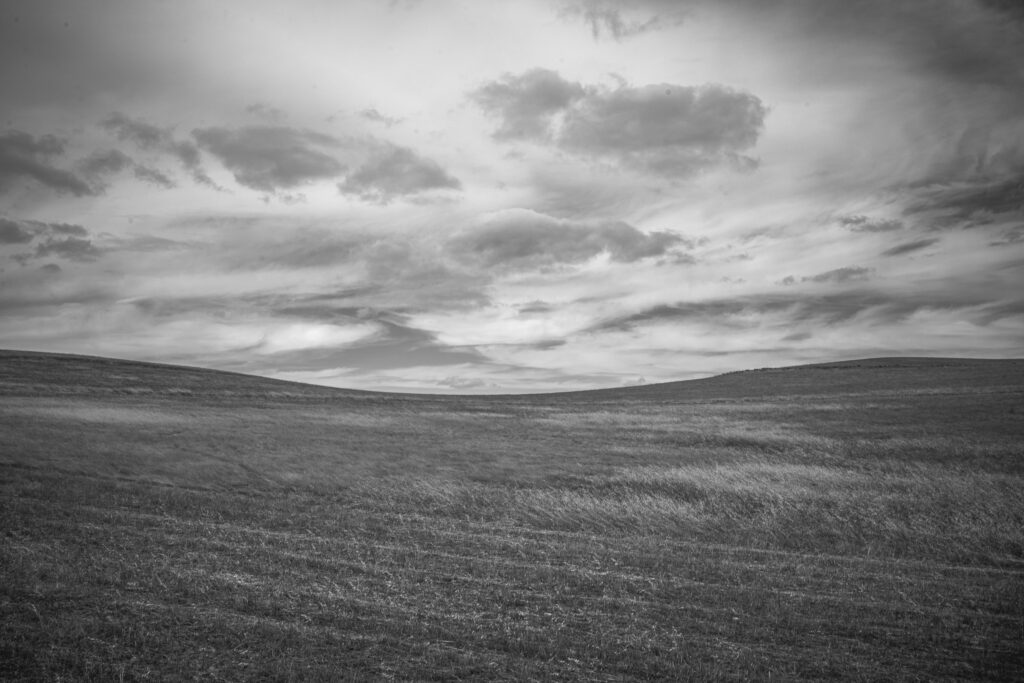
A re-engagement with naturalism in the 21st century Australia requires that we put aside the art historical linear narrative of modernism surpassing naturalism which goes into decline as a pictorial form. We need to see them in terms of being different and having a different character in historical time. Despite appearing conceptually and stylistically more conservative than other visual traditions, landscape imagery in Australia is a crucial site of conflict, change and innovation. Today it is debates about sense of place, cultural landscapes, bioregionalism, wilderness (national parks) and the misused land (exploited and degraded).
[…] a recent phototrip that included exploring the Mt Lofty Ranges in South Australia I came across the old railway line to Mannum. It hadn’t been used for a […]