


The Balcombe Creek walk is popular with joggers, family groups, people walking their dogs and visitors. My first walk along it was with Maleko our standard poodle now deceased, when we were staying with my sister who lived nearby in Mornington. We would often walk the poodles in the community woodland on the Nepean Highway next to The Briars.
I was intrigued by the small creek at the bottom of the woodland and decided to follow it if I could. So Maleko and I followed the creek down to the sea, where I had a coffee at the small, but very popular Mt Martha shopping centre.
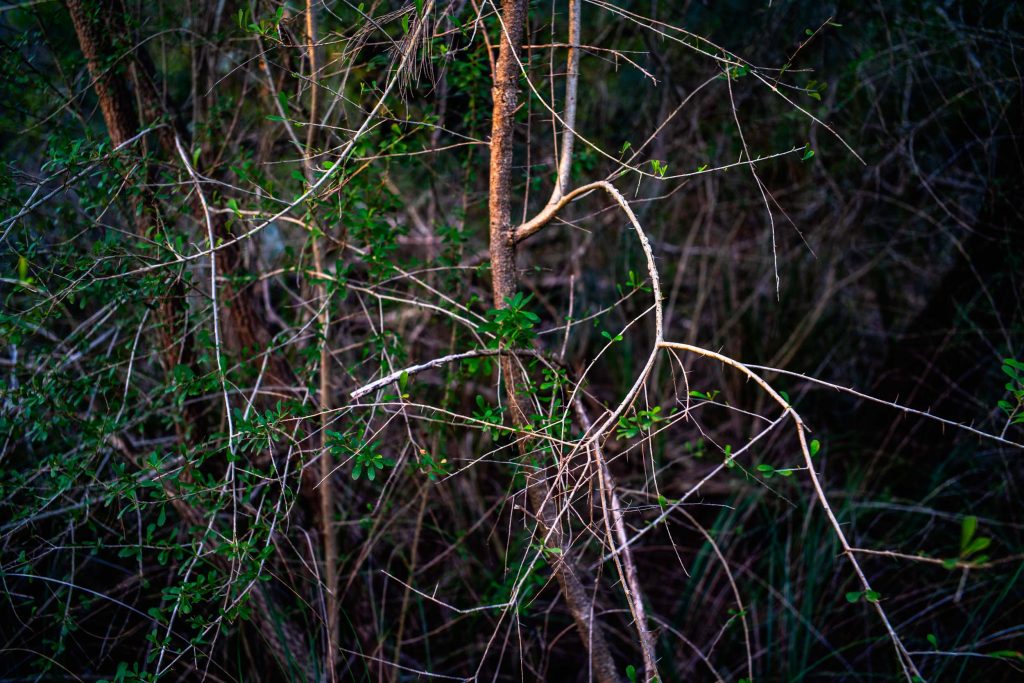
The combination of image and text in Only One Kilometre takes photography out of its modernist silo that has imprisoned art photography in a glass cage for so long. The texts are short stories, prose and poetry not philosophy and these fragments of experience enhance the images. Though the photos and text are about the natural world, this is an ecosystem that has been constructed (pathways and boardwalks) and rehabilitated (new indigenous plantings) in order to restore and preserve it to encourage the return of bird, animal and marine life.
An aesthetic philosophy could pose a question: Is it possible that these images of sensuous particulars produced by photography’s embodied eye facilitate a turn away from saying that this ecosystem is for us — our pleasures and enjoyment — and towards seeing the objective material ecosystem in itself? Seeing this ecosystem there for us in the early 20th century destroyed the fragile web of life with the flow of human rubbish and the silt from the farmed land. So how can we view it otherwise?
Joyce Evans refers to the healing power of this reserve. Can photography represent this?
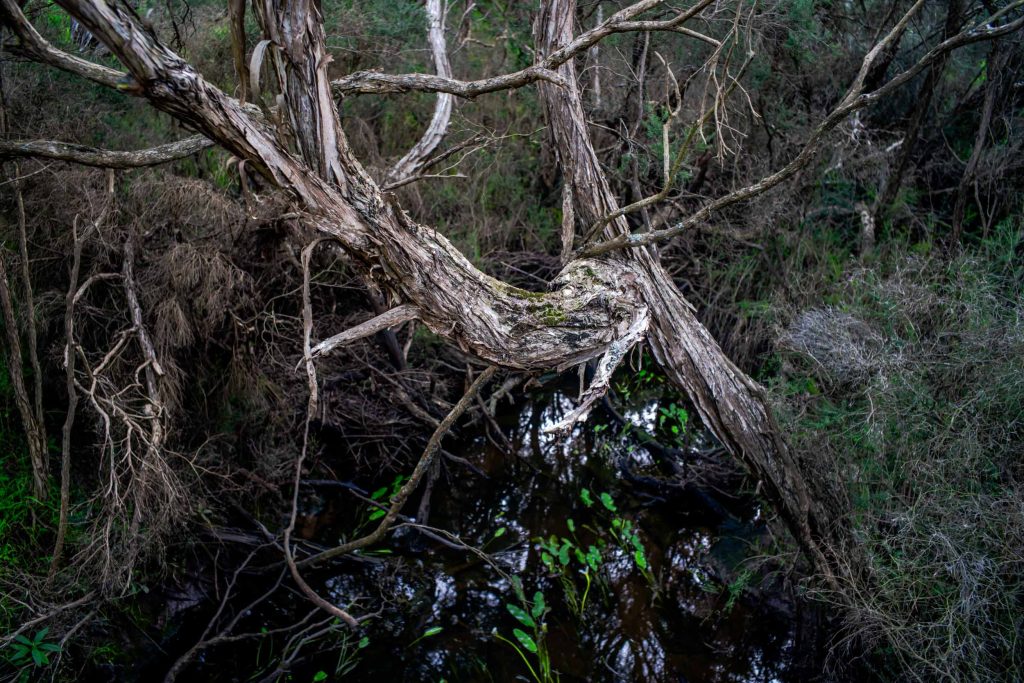
Art cannot avoid the progressive disenchantment of the world that has occurred outside art within modernity, whereby the world becomes a rational, predictable, and calculable order, where things are explained by scientific principles. It is only fairly recently that art became thoroughly secular, acquired an inner logic of development, sacrificed the abstract universal of instrumental reason to the particular and sensuous immediacy and become an anti-art (conceptual art) to avoid becoming entangled in the enchantment of the commodity.
Art, though has become a commodity –eg., Joyce Evans ran the Church St gallery in Melbourne trading in photographs from 1977 to 1981, the monograph is a commodity as are art fairs deprived of a social function. Art acquires the commodity form in the sphere of circulation not the sphere of production, as the art work is not generally produced by wage labor. The artist get to overdetermine the ends of their practices –ie., making Only One Kilometre –to a degree that other forms of labor in capitalism do not. So the artist in capitalist society is producing in a non-capitalist manner a product which, if they want to give it any social actuality, must enter into the universal medium of exchange characterized by the i fetishistic character of the commodity and use value has been absorbed into exchange value .
So the artist needs to make their artwork distributable if it is to enter into the fabric of social life.
The autonomous artwork then is inherently entwined with commodification, is a product of capitalist culture, and as a result, it has become marginalized. How can it set itself apart from other at would set it apart from the other fetishized commodities? How can it avoid its value being deprived of a social function and being only an instrument of commodity gratification? If art cannot be firmly distinguished from the enchantment of the commodity, then how does a self-determining photography live up to a concept of truth and take its truth claim seriously?
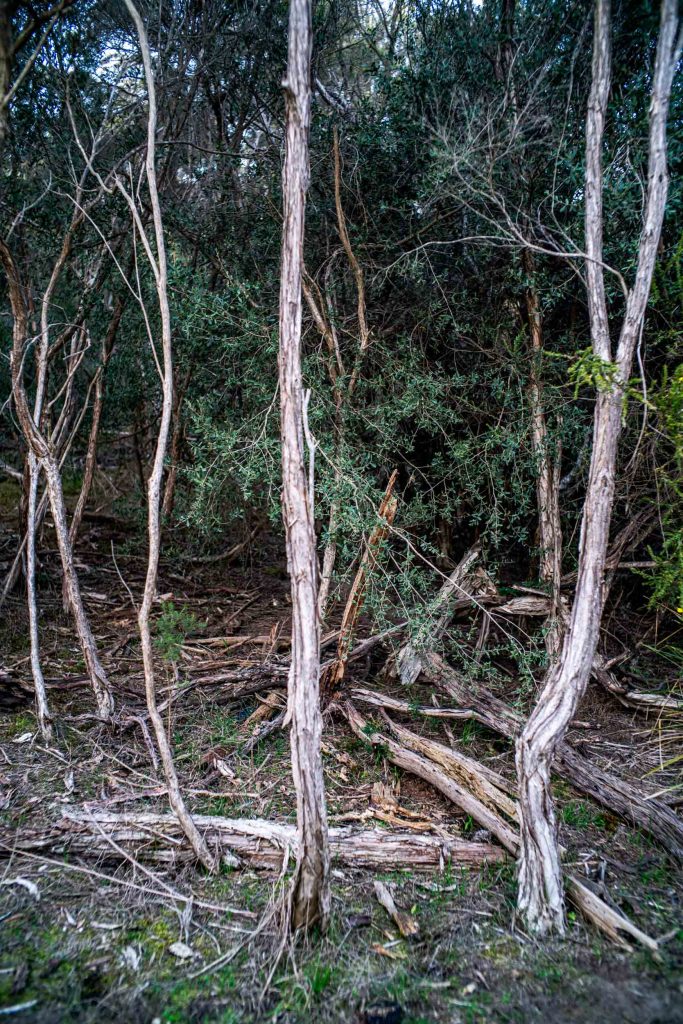
By recognizing, confronting and negotiating the structurally contradictory position of art. The power and critical status of art depends upon how one negotiates that contradiction.
If the artwork cannot distance itself from reality of a commodified world in some other way it will not be autonomous and thereby critical. Presumably, there is a process in which the artwork converges with the commodity, but there is also a process by which it diverges from the commodity by asserting its own value or autonomy in a society in which all values have become commodified.
Art can acquire significance only if it manages to implicitly criticize those conditions from which it cannot escape. Art establishes its autonomy against commodification, despite being constituted by it, and it does so by revealing what the autonomy of capital represses: that everything cannot be reduced to exchange value —- what Joyce Evans refers to as the healing power of the Balcombe Reserve.